Real Estate App Development Process: Step-by-Step Breakdown
Posted by

Daniel Carter
Not too long ago, buying or selling a property felt like a full-time job. Weekends were spent hopping from one site visit to another, phones rang endlessly with agent calls, and paper brochures piled up on the table while you waited days for updates.
Now? It starts with a scroll.
From the comfort of a couch, during a lunch break, or while commuting home, people browse homes, compare prices, explore neighborhoods on maps, and message agents instantly, all through their smartphones. No waiting. No back-and-forth. Just a few taps and the information is right there.
This simple shift in behavior has quietly transformed the entire property industry. And at the center of this transformation lies a massive opportunity in real estate application development.
Because today, property discovery isn’t happening in offices or through newspaper ads. It’s happening on mobile screens.
This is exactly why real estate apps have become the new storefront of the property industry.
The Rise of Real Estate Apps and Why the Industry is Going Mobile
The real estate industry was traditionally slow to embrace technology. For years, websites were considered “good enough.” But the explosion of smartphones changed everything. Today, more than the majority of property searches begin on a mobile device, not on a desktop and certainly not through a newspaper ad.
This massive shift in user behavior is what triggered the demand for professional real estate app development services. Property businesses realized that a website cannot deliver the same seamless, personalized, and interactive experience that a mobile app can.
A mobile app allows users to:
- Instantly search properties with advanced filters
- View high-quality images and videos
- Explore property locations through maps
- Save favorites and compare listings
- Contact agents in real time
All of this happens in seconds. No delays. No friction.
From a business perspective, this is where partnering with a reliable real estate app development company or using a smart real estate mobile app builder becomes a strategic advantage rather than a technical decision. As per the wiseguyreports, the use of mobile applications for real estate will increase by 9.5% from 2025 to 2035.
Digital Transformation in the Property Industry
Digital transformation in real estate is no longer optional, it’s essential. The modern property buyer wants transparency. They want to see pricing history, neighborhood insights, nearby amenities, and authentic visuals before they even consider visiting a site.
Similarly, sellers and agents want faster visibility, better lead management, and fewer manual follow-ups. Traditional processes simply cannot keep up with these expectations. This gap is exactly what real estate application development is designed to fill.
Mobile apps centralize listings, communication, search, and lead handling into one powerful platform. This is the reason why businesses across the globe are investing heavily in mobile app development for real estate to modernize how properties are marketed and managed.
Changing Behavior of Buyers and Sellers
Today’s buyers are researchers first and customers later. By the time they speak to an agent, they already know the market rates, property types, and preferred locations. They expect quick responses and easy access to information.
Sellers, on the other hand, expect their properties to be visible to thousands of potential buyers without relying solely on agent networks.
This new behavior makes learning how to build a real estate app incredibly valuable for agencies and property businesses that want to stay relevant.
Real-World Examples: Zillow, Realtor, Redfin, Bayut, Property Finder
The success of apps like Zillow, Realtor, and Redfin in the US, and Bayut and Property Finder in the Middle East, clearly demonstrates how impactful expert real estate app development services can be. These platforms didn’t just digitize listings, they transformed the entire property discovery experience.
They combined maps, data, visuals, communication tools, and smart search into one mobile experience. Their growth is proof that when a real estate app development company builds the right solution, it becomes the primary gateway between property seekers and property providers.
The industry is going mobile because users already have. And for businesses looking to grow, adapt, and lead, investing in real estate application development is no longer a luxury, it’s the new foundation.
What is a Real Estate Mobile App?
A real estate mobile app is a dedicated digital platform designed to help users search, list, manage, and interact with property information directly from their smartphones. Unlike traditional methods that rely on phone calls, office visits, or static websites, a mobile app creates an interactive, real-time environment where buyers, sellers, agents, and agencies can connect seamlessly.
In the world of real estate application development, a mobile app is not just a smaller version of a website. It is a purpose-built solution designed around user behavior, convenience, and instant access. It brings property discovery, communication, and decision-making into a single, portable experience that users can carry in their pockets.
For businesses exploring how to build a real estate app, understanding this distinction is crucial. A real estate mobile app is designed to simplify the entire property journey, from browsing listings to scheduling visits and even initiating conversations with agents, all within a few taps.
Definition of a Real Estate Mobile App
At its core, a real estate mobile app is a feature-rich application that allows users to:
- Search and filter property listings
- View images, videos, and property details
- Explore locations through integrated maps
- Save favorite properties
- Contact agents instantly
- Manage property listings and inquiries
This is why mobile app development for real estate has become such a high-demand area. These apps are built to deliver speed, personalization, and usability that modern users expect when searching for homes or managing property deals.
Professional real estate app development services focus on creating intuitive interfaces, powerful search capabilities, and seamless communication tools that turn a complex property process into a smooth digital experience.
Difference Between a Website and a Real Estate App
Many property businesses believe that having a website is enough. However, the difference between a website and a mobile app is significant, especially in the property industry.
A website is primarily informational. Users visit it, browse, and leave. It depends heavily on browsers, loading speeds, and internet stability. It also lacks personalization and real-time engagement.
A mobile app, on the other hand, offers:
- Faster performance
- Personalized user experience
- Push notifications for new listings and updates
- Offline access to saved properties
- Direct device features like GPS, camera, and calls
- Seamless communication within the app
This is the point where partnering with a real estate app development company or using a reliable real estate mobile app builder becomes valuable. These solutions are crafted to leverage mobile capabilities that websites simply cannot provide.
In simple terms, a website is a digital brochure. A real estate app is a Digital Assistant.
Who Uses a Real Estate Mobile App?
One of the strongest advantages of real estate application development is that it serves multiple user groups on a single platform.
Buyers use the app to search properties, compare options, explore locations, and contact agents instantly. They rely on advanced filters, visuals, and saved searches to make informed decisions.
Sellers use the app to list properties, upload images, track inquiries, and get faster visibility without depending solely on traditional agent networks.
Agents benefit from managing listings, responding to leads, scheduling visits, and communicating with clients in real time. This automation significantly reduces manual effort.
Real estate agencies use the app as a centralized system to manage properties, leads, teams, and customer interactions efficiently. For them, investing in mobile app development for real estate is a strategic move toward automation and scalability.
Because of this multi-user functionality, businesses increasingly seek expert real estate app development services to ensure the platform is designed for all stakeholders.
Understanding who uses the app and how they interact with it is an essential step for anyone learning how to build a real estate app that truly delivers value.
A well-designed real estate mobile app becomes more than just a listing platform. It becomes a complete ecosystem where property discovery, communication, and management happen in one integrated space, powered by smart technology and thoughtful design.
Popular Types of Real Estate Apps You Can Build
Before you jump into real estate application development, one of the most important decisions is choosing the type of app you want to build. Not every real estate app serves the same purpose, and not every business needs a Zillow-style marketplace. Your app’s structure, features, and even the tech stack will depend heavily on the category you choose.
For anyone researching how to build a real estate app, understanding these app types helps you align your idea with the right business model and user expectations. Professional real estate app development services usually begin by identifying which category fits your goals best.
Here are the most popular types of real estate apps you can build.
Listing Apps
Listing apps are the most common form of mobile app development for real estate. These apps focus primarily on displaying property listings with detailed information, images, pricing, and location.
Users can search, filter, and explore properties based on their preferences. These apps are ideal for businesses that want to showcase large numbers of properties and generate leads from buyers.
Platforms like Zillow, Realtor, Bayut, and PropertyFinder are classic examples of listing apps built by expert real estate app development companies. Their success shows how powerful a well-structured listing platform can be when supported by strong search features, maps, and smooth user experience.
Rental Apps
Rental apps are specifically designed for users looking to rent properties rather than buy them. While they may look similar to listing apps, their core focus is different.
These apps include features like:
- Short-term and long-term rental filters
- Pricing per month
- Availability status
- Tenant and landlord communication
Rental-focused real estate application development is highly popular in urban cities where people frequently move and prefer renting over buying. Businesses targeting students, working professionals, or vacation rentals often invest in this category through specialized real estate app development services.
Brokerage Apps
Brokerage apps are built for real estate brokers and agents to manage their listings, leads, and client communication. These apps are less about public browsing and more about internal management and client handling.
They usually include:
- Lead tracking
- Property management dashboard
- Client communication tools
- Visit scheduling
- Performance tracking for agents
A real estate mobile app builder or custom development partner can help brokerages digitize their entire workflow, making operations faster and more organized.
Property Management Apps
Property management apps are designed for landlords, property managers, and agencies handling multiple properties. These apps go beyond listing and focus on managing tenants, payments, maintenance requests, and documentation.
This type of mobile app development for real estate is ideal for businesses that manage apartments, commercial buildings, or housing societies. It automates daily operations and reduces manual work significantly.
Many businesses hire a professional real estate app development company to build such apps because they require more advanced backend systems and user role management.
Marketplace vs Single-Agency Apps
Another key decision in how to build a real estate app is choosing between a marketplace model and a single-agency model.
A marketplace app allows multiple agents, sellers, and agencies to list properties on the same platform. This model focuses on volume and variety, similar to Zillow or Bayut.
A single-agency app is built for one real estate business to showcase only its own listings and manage its clients directly. This is ideal for agencies wanting to strengthen their brand and control user experience.
Both models require different approaches in real estate application development, and choosing the right one determines how your platform grows and generates revenue.
Understanding these app types helps you define your vision clearly before starting development. With the right guidance from expert real estate app development services, you can select the model that best fits your business goals and target audience.
Why Businesses Are Investing in Real Estate Application Development
Real estate businesses across the world are rethinking how they attract clients, manage listings, and close deals. The traditional model, dependent on calls, physical visits, and manual follow-ups, is no longer efficient in a market where customers expect instant responses and digital convenience. This shift is the main reason why companies are rapidly investing in real estate application development to modernize their operations and stay competitive.
For agencies, brokers, and property firms, this is not just a technology upgrade. It’s a strategic business move powered by mobile app development for real estate that directly impacts growth, efficiency, and brand positioning.
If you’re exploring how to build a real estate app, understanding these business benefits will show you why so many companies are prioritizing it.
Strong Business Benefits That Go Beyond Listings
A real estate app is much more than a place to display properties. It becomes a centralized platform where property discovery, client communication, lead tracking, and brand experience come together.
With the help of professional real estate app development services, businesses can create a system that works for them 24/7. The app handles property browsing, inquiries, notifications, and updates automatically, reducing the need for constant manual effort.
This level of accessibility and convenience improves customer satisfaction while allowing businesses to operate more efficiently. Partnering with a reliable real estate app development company or using a smart real estate mobile app builder helps transform traditional workflows into a streamlined digital process.
Consistent and Automated Lead Generation
One of the biggest reasons companies invest in real estate application development is lead generation. A mobile app acts as a powerful lead capture tool.
When users browse properties, save favorites, request information, or schedule visits, the app automatically records these actions as leads. Agents no longer have to chase inquiries manually because the system organizes and tracks everything in one place.
Through mobile app development for real estate, businesses can also send push notifications about new listings, price drops, and updates, bringing users back to the app and increasing engagement. This continuous interaction creates a steady flow of high-quality leads without relying solely on advertisements or third-party portals.
For companies learning how to build a real estate app, this automated lead funnel is one of the most valuable outcomes.
Building Brand Authority and Trust
In today’s digital world, customers judge a brand by its online presence. A business with a professional mobile app instantly appears more established, trustworthy, and modern than one relying only on social media pages or basic websites.
Investing in expert real estate app development services allows businesses to present their listings, services, and communication in a polished, branded environment. Users associate this smooth experience with reliability and professionalism.
A well-designed app built by an experienced real estate app development company strengthens brand identity and positions the business as a serious player in the market.
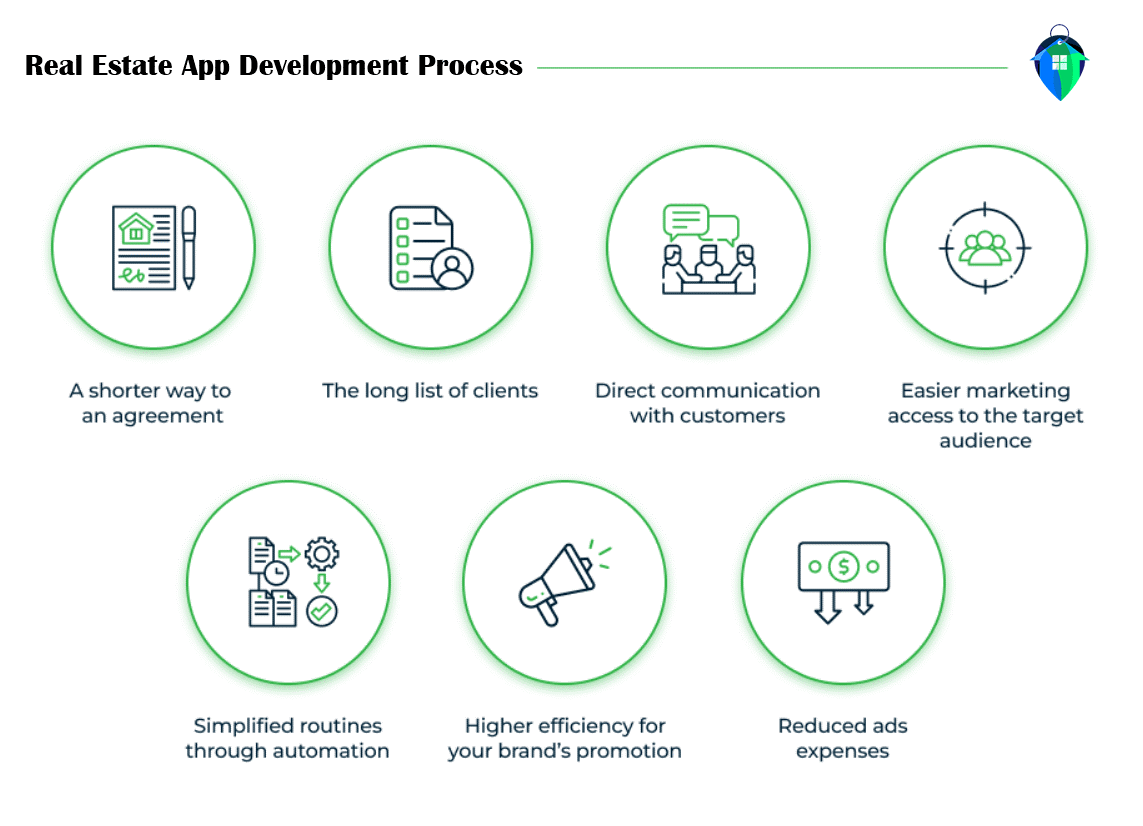
Automation That Saves Time and Reduces Costs
Manual processes consume time and resources. Agents answering the same questions repeatedly, managing listings manually, and following up on inquiries individually slows down productivity.
This is where real estate application development makes a significant difference. Apps automate property updates, inquiry management, notifications, and even appointment scheduling.
With the support of a capable real estate mobile app builder, businesses can create a system where most routine tasks happen automatically. This allows agents and staff to focus on closing deals instead of handling repetitive administrative work.
Over time, this automation reduces operational costs by 40% while improving response time and customer experience.
For modern real estate businesses, investing in mobile app development for real estate is no longer optional. It is a strategic decision that improves lead generation, strengthens brand authority, and introduces automation into everyday operations. Understanding these benefits is essential for anyone considering how to build a real estate app that delivers real business value.
Essential Features Required in Mobile App Development for Real Estate
When planning real estate application development, features are where your app either succeeds or fails. A visually appealing interface is important, but what truly defines the value of a real estate app is how well it serves its users, buyers, sellers, agents, and administrators.
If you’re researching how to build a real estate app, you must think in terms of panels and roles. Each user interacts with the app differently, and professional real estate app development services structure the platform around these distinct needs.
Below are the essential feature sets every successful app must include.
User Panel Features
The user panel is designed for buyers and property seekers. This is the front-facing side of your app and the core reason people download it.
In effective mobile app development for real estate, the user panel typically includes:
- Easy registration and login
- Advanced property search with filters (price, location, type, size)
- High-quality images and videos
- Integrated map view for property location
- Save favorites and compare listings
- Instant chat or call option to contact agents
- Property details including amenities, pricing, and descriptions
- Push notifications for new listings and updates
A skilled real estate app development company ensures that this panel is intuitive, fast, and engaging because it directly impacts user retention and lead generation.
Agent Panel Features
The agent panel is where real estate agents manage their listings and interact with potential clients. This section is crucial for streamlining agent workflows.
Key features include:
- • Add, edit, and remove property listings
- Upload images, videos, and property details
- Receive and manage inquiries from users
- Schedule property visits
- Direct communication with clients
- Lead tracking and status updates
Through thoughtful real estate application development, agents can handle multiple listings and clients without relying on spreadsheets or manual follow-ups. Many agencies opt for expert real estate app development services to ensure this panel is efficient and easy to use.
Admin Panel Features
The admin panel is the control center of the entire app. It allows businesses and agencies to monitor everything happening on the platform.
Essential admin features include:
- User and agent management
- Approval and moderation of property listings
- Dashboard with analytics and reports
- Lead monitoring
- Content management
- Notification control
- Subscription or payment management (if monetized)
A powerful admin panel built using a reliable real estate mobile app builder or custom solution gives businesses full control over operations, users, and performance metrics.
Advanced Features (Maps, Chat, Filters, AI)
To stay competitive, modern mobile app development for real estate must go beyond basic listings. Advanced features enhance user experience and set your app apart.
These include:
- Real-time map integration for location-based search
- In-app chat between users and agents
- Smart filters for precise property search
- AI-based property recommendations based on user behavior
- Virtual tours and image galleries
- Mortgage calculators and pricing insights
When businesses partner with an experienced real estate app development company, these advanced tools are integrated seamlessly to create a modern, intelligent property platform.
Understanding these essential features is a critical step in learning how to build a real estate app that is practical, user-friendly, and scalable. The right mix of user, agent, admin, and advanced capabilities ensures your real estate application development delivers real value to every stakeholder.
Step-by-Step Real Estate App Development Process
Understanding the process is the most important part of real estate application development. Many businesses jump straight into design or coding without proper planning, which often leads to delays, budget overruns, and an app that doesn’t meet user expectations.
If you truly want to learn how to build a real estate app the right way, you need a structured, step-by-step approach. Professional real estate app development services follow a proven process that ensures the final product is functional, scalable, and aligned with business goals.
Here’s how the development journey typically unfolds.
Requirement Gathering
Every successful project starts with clarity. In this phase, a real estate app development company works closely with the business to understand:
- Target audience (buyers, sellers, agents, agencies)
- Type of app (listing, rental, brokerage, or management)
- Core features and user roles
- Monetization plans
- Business goals and timelines
This stage lays the foundation for the entire mobile app development for real estate project. Skipping or rushing this step often creates confusion later in development.
Wireframing
Once requirements are clear, the next step is wireframing. Wireframes are basic visual layouts that show how the app will be structured. They define where buttons, listings, menus, and features will appear.
Wireframing helps businesses visualize the app before any design or coding begins. Many teams use a real estate mobile app builder or design tools to create these layouts and finalize the user flow early on.
This step ensures that the real estate application development process moves forward with a clear blueprint.
UI/UX Design
After wireframes are approved, designers focus on the user interface (UI) and user experience (UX). This is where the app starts to look and feel real.
UI/UX design in mobile app development for real estate focuses on:
- Clean and modern design
- Easy navigation
- Fast access to property search
- Smooth interaction between users and agents
A professional real estate app development company ensures the design is not just attractive but also user-friendly, as this directly affects engagement and retention.
Development
This is the core phase where developers turn designs into a working application. The frontend (what users see) and backend (server, database, logic) are built during this stage.
Experienced real estate app development services use scalable technologies so the app can handle thousands of listings and users without performance issues.
This stage also includes building separate panels for users, agents, and admins as planned earlier in the real estate application development process.
Integrations
No real estate app works in isolation. Integrations are essential for full functionality.
These may include:
- Map services for property locations
- Chat systems for communication
- Payment gateways for subscriptions or listings
- Notification services
- CRM or analytics tools
A skilled real estate app development company ensures these integrations are smooth and secure.
Testing
Before launch, the app goes through rigorous testing. This includes checking for bugs, performance issues, security concerns, and usability problems.
Testing ensures the mobile app development for real estate delivers a smooth experience across different devices and screen sizes.
Deployment
Finally, the app is deployed to app stores and servers. Even after launch, ongoing monitoring and updates are part of the real estate application development lifecycle.
Following this structured approach is essential for anyone serious about learning how to build a real estate app that performs reliably in the real world.
Best Tech Stack for Real Estate App Development
Choosing the right technology is a critical step in real estate application development. Your tech stack determines how fast your app performs, how well it scales with growing listings and users, and how secure the data remains. Many businesses focus heavily on features but overlook the technical foundation that supports those features.
If you’re exploring how to build a real estate app, understanding the ideal tech stack will help you make informed decisions when working with a real estate app development company or evaluating different real estate app development services.
A strong tech stack ensures that your mobile app development for real estate is reliable, scalable, and future-ready.
Frontend
The frontend is what users interact with, the screens, buttons, listings, maps, and navigation. In mobile app development for real estate, the frontend must be fast, responsive, and visually smooth because users frequently browse multiple listings and images.
Popular frontend technologies include:
- Flutter and React Native for cross-platform apps (Android and iOS with one codebase)
- Swift for iOS-specific apps
- Kotlin for Android-specific apps
Cross-platform frameworks are widely preferred in real estate application development because they reduce development time and cost while delivering a near-native experience.
Backend
The backend is the engine of the app. It handles user data, property listings, search logic, communication, and overall performance. A weak backend can slow down even the best-designed app.
Common backend technologies used by a professional real estate app development company include:
- Node.js
- Python (Django / Flask)
- Ruby on Rails
- PHP (Laravel)
These frameworks are capable of managing large databases, multiple user roles, and real-time interactions, all essential in mobile app development for real estate.
Database
Real estate apps handle large amounts of data: property details, images, user profiles, messages, and more. Choosing the right database ensures quick data retrieval and smooth performance.
Popular database choices include:
- MongoDB for flexible data structures
- PostgreSQL or MySQL for structured data
- Firebase for real-time data handling
Experienced real estate app development services select databases based on the app’s complexity and scalability requirements.
APIs
APIs connect your app with external services that enhance functionality. In real estate application development, APIs are essential for features users expect.
Key APIs include:
- • Google Maps API for location and map views
- Payment gateway APIs for subscriptions and listings
- Chat APIs for communication
- Notification APIs for push alerts
- Analytics APIs for tracking user behavior
A reliable real estate mobile app builder or development team ensures these APIs are integrated securely and efficiently.
Hosting & Security
Hosting determines how reliably your app runs, while security protects sensitive user and property data. This is a crucial part of how to build a real estate app that users can trust.
Common hosting solutions include:
- AWS (Amazon Web Services)
- Google Cloud Platform
- Microsoft Azure
Security measures include data encryption, secure authentication, role-based access, and regular backups. A professional real estate app development company always prioritizes hosting reliability and data protection as part of their real estate app development services.
The right tech stack forms the backbone of successful real estate application development. With the proper combination of frontend, backend, database, APIs, and secure hosting, your mobile app development for real estate can deliver a seamless and scalable experience for all users.
Real Estate App Development Monetization Strategies
Building an app is only half the journey. The real success of real estate application development lies in how effectively the platform generates revenue over time. A well-planned monetization strategy ensures that your investment in mobile app development for real estate turns into a sustainable and scalable business model.
If you’re learning how to build a real estate app, you must think about monetization from the early planning stage. Professional real estate app development services often design the app architecture in a way that supports multiple revenue streams without affecting user experience.
Here are the most effective monetization strategies used by successful real estate apps.
Subscriptions
Subscription plans are one of the most reliable revenue models in real estate application development. In this model, agents, brokers, or property owners pay a monthly or yearly fee to list properties or access premium features.
These plans may include:
- Unlimited property listings
- Access to advanced analytics
- Priority customer support
- Lead management tools
A skilled real estate app development company can integrate subscription management and payment gateways directly into the app, making it easy for users to upgrade their plans. This creates a predictable, recurring income for the business.
Featured Listings
Featured listings are a popular way to monetize visibility. Property owners or agents pay to highlight their listings at the top of search results or on the homepage.
This strategy works extremely well in mobile app development for real estate because users tend to click on the first few listings they see. By offering premium placement, your app generates revenue while providing agents with better exposure.
A smart real estate mobile app builder ensures that featured listings are clearly displayed without disrupting the user experience.
Advertisements
In-app advertisements are another effective monetization method. Real estate apps often attract high traffic from buyers, renters, and investors, making them valuable platforms for advertisers.
You can display ads related to:
- Home loans and mortgage services
- Interior design and furniture
- Moving and relocation services
- Home insurance providers
When implemented carefully by experienced real estate app development services, ads can generate revenue without overwhelming users.
Commission Model
The commission model is highly profitable for marketplace-style apps. In this strategy, the app charges a small percentage fee when a property deal is successfully closed through the platform.
This approach is commonly used by apps developed by top real estate app development companies because it aligns the app’s success with the user’s success. The more deals happen, the more revenue the platform earns.
For businesses exploring how to build a real estate app, this model is ideal when you expect high transaction volumes.
Memberships
Membership plans are slightly different from subscriptions. Here, users pay for access to exclusive benefits such as premium listings, early access to properties, or direct contact with verified agents.
This strategy adds an extra layer of value and trust to your real estate application development, especially for serious buyers and professional agents.
A successful monetization plan ensures that your mobile app development for real estate becomes a long-term revenue-generating asset. By combining subscriptions, featured listings, ads, commissions, and memberships, you can create multiple income streams supported by expert real estate app development services.
How Much Does It Cost to Develop a Real Estate App?
One of the first questions businesses ask before starting real estate application development is simple: how much will it cost? The honest answer is that the cost depends on several factors, features, complexity, design, technology, and the team you choose to work with.
If you’re researching how to build a real estate app, it’s important to understand that pricing is not fixed. A basic app with essential features will cost significantly less than a fully customized platform with advanced tools, integrations, and multiple user panels. This is why experienced real estate app development services always begin with requirement analysis before providing an estimate.
Let’s break down where the cost actually comes from.
Cost Breakdown by Features
Features are the biggest cost driver in mobile app development for real estate. The more functionality you add, the more development time and technical effort is required.
Basic features that impact cost include:
- User registration and login
- Property listings with images and details
- Search and filter options
- Map integration
- Contact agent functionality
Advanced features increase the cost further, such as:
- In-app chat system
- AI-based property recommendations
- Virtual tours
- Payment integration for subscriptions
- Admin dashboards and analytics
A professional real estate app development company will help you prioritize features so you don’t overspend on unnecessary additions during the initial phase.
MVP vs Full App
A key decision in real estate application development is choosing between building an MVP (Minimum Viable Product) or a full-featured app from the start.
An MVP includes only the essential features required to launch the app and test it with real users. This approach reduces initial investment and allows you to gather feedback before scaling. Many startups and agencies prefer this route when learning how to build a real estate app without committing to a large budget upfront.
A full app, on the other hand, includes advanced features, refined design, multiple panels, and deeper integrations. This requires more time, a larger team, and a higher budget but delivers a complete product ready for large-scale use.
Reliable real estate app development services often recommend starting with an MVP and upgrading gradually based on user response.
Ongoing Maintenance Costs
The cost of mobile app development for real estate doesn’t end at launch. Ongoing maintenance is a crucial part of keeping the app functional, secure, and up to date.
Maintenance costs typically include:
- Server and hosting fees\
- Bug fixes and performance updates
- Security updates
- Adding new features over time
- Compatibility updates for new device versions
Partnering with a dependable real estate app development company ensures that your app remains stable and scalable after deployment. Some businesses also use a real estate mobile app builder for easier updates and management.
In summary, the cost of real estate application development depends on your feature set, development approach, and long-term vision. Understanding these factors helps you plan your budget wisely while building an app that delivers real value.
Choosing the Right Real Estate App Development Company
No matter how strong your idea is, the success of your real estate application development project depends heavily on who builds it. The right partner can turn your vision into a scalable, user-friendly platform. The wrong one can lead to delays, budget overruns, and an app that fails to meet expectations.
If you’re serious about learning how to build a real estate app, selecting the right real estate app development company is one of the most important decisions you will make.
What to Look For
When evaluating a development partner, start with their experience in mobile app development for real estate. Real estate apps are not the same as eCommerce or social media apps. They require expertise in property listings, map integrations, search filters, user roles, and lead management systems.
Look for:
- A portfolio of similar projects
- Understanding of real estate business workflows
- Strong UI/UX design capabilities
- Knowledge of scalable tech stacks
- Clear development process and timelines
- Post-launch support and maintenance
A company offering professional real estate app development services should be able to guide you from planning to deployment while suggesting improvements based on industry experience.
Why Expert Real Estate App Development Services Matter
Real estate apps involve multiple user panels, buyers, sellers, agents, and admins. They also require advanced features like maps, chat systems, filters, notifications, and secure data handling.
This complexity is why expert real estate app development services matter. An experienced team knows how to structure the app so it remains fast, organized, and scalable even as listings and users grow.
Working with a specialized real estate app development company ensures that common mistakes are avoided and best practices are followed throughout the real estate application development lifecycle.
Real Estate Mobile App Builder vs Custom Development
Another important decision in how to build a real estate app is choosing between a real estate mobile app builder and custom development.
A mobile app builder is faster and more budget-friendly. It offers pre-built templates and standard features that can be launched quickly. This option is suitable for small agencies or startups that want to enter the market with minimal investment.
Custom development, however, provides complete flexibility. You can design unique features, branding, workflows, and integrations tailored specifically to your business model. While this approach requires more time and budget, it results in a fully personalized platform.
Many businesses start with a builder and later switch to custom solutions as they grow. A good real estate app development company will help you choose the approach that fits your current goals and future plans.
Choosing the right partner for real estate application development ensures that your investment translates into a high-performing app. With expert guidance and the right development approach, your mobile app development for real estate project can deliver long-term success.
Final Thoughts on Building a Successful Real Estate App
Building a successful app in today’s property market is no longer about simply putting listings online. It’s about creating a seamless digital experience that connects buyers, sellers, agents, and agencies on one intelligent platform. This is the true goal of effective real estate application development.
Throughout this guide, we explored how to build a real estate app from the ground up, understanding the rise of mobile-first property search, identifying the right app type, defining essential features, selecting the best tech stack, following a structured development process, planning monetization strategies, estimating costs, and choosing the right real estate app development company.
Each of these steps plays a crucial role in shaping an app that is not only functional but also scalable and profitable.
Investing in mobile app development for real estate is a strategic move for businesses that want to stay competitive in a rapidly digitizing industry. With the support of expert real estate app development services or even a reliable real estate mobile app builder, you can transform traditional property operations into a modern, automated system that works around the clock.
The key is thoughtful planning, user-focused features, and a strong technical foundation. When done right, your app becomes more than a tool, it becomes the primary gateway between property seekers and property providers.
As the real estate industry continues to evolve, businesses that embrace smart real estate application development today will be the ones leading the market tomorrow.
Author Info
Date: 10-02-2026
Daniel Carter
Daniel Carter is a professional Real Estate Content Writer at Realogixs with 8+ years of experience crafting data-driven, SEO-optimized content for agents, brokers, and property brands. He focuses on creating authoritative blog posts, market insights, and conversion-focused website copy designed to improve search rankings and drive measurable growth.


CONTACT US TODAY