How to Design a Real Estate Website That Generates Leads.
Posted by

Daniel Carter
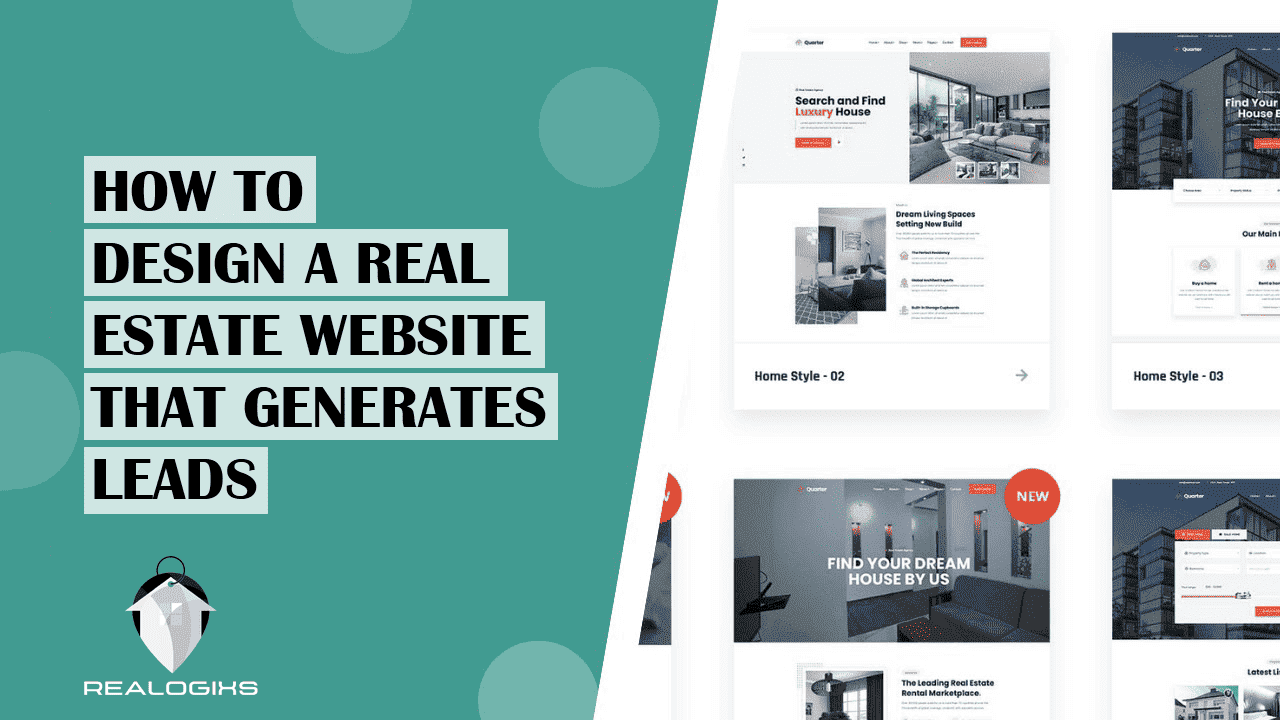
In today’s digital-first world, your real estate website isn’t just a digital business card — it’s your most powerful sales engine. For real estate agents, brokers, and firms, a well-optimized site can turn casual browsers into committed buyers. But to make that happen, you need more than good-looking visuals; you need a Real Estate Website Design that’s strategically built to generate leads.
At Realogixs, we understand that every click, scroll, and form submission counts. Whether you're building from scratch or upgrading your digital presence, the key to unlocking success lies in crafting a Professional Real Estate Website that seamlessly guides visitors through the process from curiosity to conversion. To learn more about building high-converting real estate sites, check out this helpful guide from Sierra Interactive:
How to Build the Best Website for Real Estate Leads1. The New Role of a Real Estate Website
Gone are the days when a real estate site was just a gallery of properties. Today, it's a Real Estate Lead Generation Website-a living, breathing tool designed to engage, nurture, and convert visitors into qualified leads.
Modern buyers do their homework online. The National Association of Realtors reports that more than 95% of homebuyers begin their property search digitally. That makes your website your first handshake-your chance to prove credibility, show expertise, and build trust before a client ever meets you.
The difference between a generic website and the Modern Real Estate Website Design is its purpose. The former showcases listings; the latter sells trust, convenience, and solutions.
2. Know Your Audience Before You Design
Understanding who you're designing for lays the foundation for effective Real Estate Web Design. Are you targeting first-time homebuyers, luxury investors, or commercial property seekers? Each one has unique expectations, pain points, and search habits.
Start by developing buyer personas, or fictional versions of your perfect customer. For instance:
- Sarah is a 28-year-old first-time buyer who wants the property to be affordable, safe, and have good neighborhood schools.
- David, a seasoned investor, seeks ROI, location analytics, and off-market listings. Knowing your audience drives everything: your visuals, tone, navigation, and CTAs. A website designed thinking about user intent is always high performing because it speaks directly to the visitor's needs.
3. First Impressions Matter: Design with Credibility
The moment someone lands on your site, you have less than five seconds to make an impression. A Professional Real Estate Website should reflect trust, competence, and elegance. That’s where Realogix comes in-we specialize in creating clean, responsive, and conversion-focused designs that capture the spirit of your brand and market.
Focus on:
- High-quality visuals: Use professional property photos and 360-degree virtual tours.
- Consistent Branding: The color palette, logos, and typography should show your identity.
- Clear messaging: Your homepage needs to immediately communicate your point of differentiation, be it luxury properties, local expertise, or full-service realty.
A clean layout, modern typography, and strategic use of whitespace can take your real estate website design from basic to breathtaking.
4. Optimize for Mobile, Because Most Buyers Are
Over 70% of property searches are done over smartphones. If your website doesn't perform well on mobile, you're losing leads before they even start browsing.
A modern real estate website design must be fully responsive, meaning it automatically adjusts for all screen sizes. Buttons should be large enough to tap easily, property filters should be thumb-friendly, and images should load fast without distortion.
Google also gives priority to mobile-friendly websites in search rankings; thus, responsive design isn't just good for users; it's imperative for SEO and visibility.
5. Build Effortless Navigation
Think of a website as that map: people need to know where they've landed and where to navigate next. The best of real estate website design keeps simplicity at the forefront. A confused visitor seldom converts.
Include the following essential pages:
- Home
- Properties / Listings
- Buy / Sell / Rent
- About
- Blog / Insights
- Contact / Schedule a Viewing.
Every option in menus should have a clear role. Use sticky navigation bars so users can access needed pages from any place on the site. Consider filters for location, price range, and property type; they make browsing easier and faster.
6. Make Property Listings Work as Sales Tools
A property page should do more than list details; it should persuade. Each listing should have:
- Breathtaking high-resolution photos.
- Engaging, descriptive text that highlights lifestyle, not just square footage
- Key details: price, location, amenities, contact form
- Embedded maps displaying nearby schools, parks, and transit
- “Request Info” or “Book a Tour” buttons are placed strategically
This turns your page into a Real Estate Lead Generation Website, not just a digital catalog. For more industry insights, you can also explore modern real estate website design trends here:
Real Estate Website Design Trends
At Realogixs, emotional storytelling is our design strategy, since people don't just buy homes; they buy experiences. Every listing should make a visitor imagine life in the space.
7. Integrate Trust-Building Elements
Trust is the secret ingredient behind every conversion. A visitor may love your listings, but if they do not trust your brand, they will not fill out the form.
To establish credibility:
- Display agent profiles with professional photos and bios
- Add client testimonials and Google Reviews
- Showcase awards, licenses, or partnerships
- Include real success stories with before-and-after results
These humanize your brand and reinforce that your firm — or your Professional Real Estate Website, is authentic, established, and dependable.
8. Use Lead Capture Forms Wisely
Lead forms are where the magic happens-but only if they're done right. The objective is to collect information without scaring visitors away.
Keep it short: name, email, phone number, and message. Offer value in return, such as:
- Get a Free Home Valuation.
- Receive Weekly Market Insights.
- Be the First to See New Listings.
Place forms strategically on:
- Home page banners.
- Property pages.
- Blog sidebars.
- Non-intrusive exit pop-ups.
Automate responses and lead nurturing by integrating your forms with a CRM system. Tools like HubSpot or Zoho can track, score, and auto-follow up, so you will never miss any potential clients.
9. Add Live Chat or Chatbots for Instant Connection
Timing is everything in the world of real estate. When a potential client has a question, they want an instant answer. A chatbot or a live chat system bridges that gap.
An AI-powered chatbot can:
- Answer FAQs instantly
- Arrange viewings
- Collect lead information
- Offer personalized property suggestions
At Realogixs, we often include chat support features in our Best Real Estate Website Design to enable 24/7 engagement. Even when you go offline, your website keeps working for you in nurturing leads right in real time.
10. Power Up Your SEO: Be Found Before You're Chosen
Your design can look amazing, but if it's not visible, it's invisible. SEO is the way to drive traffic to your Real Estate Website That Generates Leads.
Optimize your pages with:
- Location-based keywords like "Luxury Homes in Miami" or "Apartments for Sale in Chicago"
- SEO-friendly URLs (e.g., /luxury-homes-los-angeles)
- Meta descriptions that attract clicks
- Alt tags for images
- Internal links to related pages
For best practices, always follow Google’s official SEO Starter Guide, which explains how to structure your website for better rankings. You can check it here:
Regular blogging - publishing market trends, community guides, and home buying tips - can help you establish credibility. Plus, Google favors websites with fresh, relevant content.
Keep in mind: SEO isn't a one-time task; it is a long-term investment that keeps your Real Estate Lead Generation Website bringing new prospects month after month.
11. Use Strong Calls-to-Action (CTAs) Everywhere
Every page on your site should move the visitor to take the next step. That's where CTAs come in: short, action-oriented prompts that drive engagement.
Examples include:
- Schedule a Free Consultation.
- Request a Virtual Tour.
- Download the Market Report.
- Talk to an Expert Agent.
According to HubSpot’s guide on high-converting CTAs, effective calls-to-action should stand out visually and use clear, action-driven language. You can check their examples here:
CTAs need to stand out visually, featuring bold colors, clear placement, and actionable language. The idea is that it has to be easy for users to act without having to think.
With strategic placement, CTAs can double, or even triple, conversions on a modern real estate website design.
12. Continuous Tracking, Analysis, and Improvement
Even the best websites can get better. That's why analytics are critical. Tools like Google Analytics, Meta Pixel, and Hotjar help you understand:
- Which pages do visitors stay on the longest?
- Where do they drop off?
- Which CTAs get the most clicks?
- How leads are converting
A/B testing: Compare two versions of a page or form to see what works best. At Realogixs, we help clients optimize based on real data and not by guessing. This iterative approach ensures that your Real Estate Website Design will continue to evolve in line with your audience's behavior and market trends.
13. Why Realogixs Is the Right Partner for Real Estate Web Design
Designing a Real Estate Website That Generates Leads requires both art and strategy: a perfect balance between aesthetics, technology, and marketing psychology. That's exactly what Realogixs delivers.
We don't just build websites; we create growth engines for real estate professionals. From website design for real estate agents through to bespoke property platforms, we're focused on:
- High-performance design
- CRM integration
- SEO optimization
- Mobile responsiveness
- Ongoing support and maintenance
Whether you're an independent agent or a large brokerage, the aim is simple: to create the best real estate website design for your brand, your audience, and your goals.
14. The Future: Smarter, More Personalized Real Estate Sites
The next evolution of Real Estate Web Design is personalization: the use of data and AI to deliver to each visitor content that is uniquely suited to them. Consider a returning user who sees recommendations of listings based on their last visit or gets personalized alerts on similar homes.
Realogixs is already integrating these innovations, thereby creating intelligent, Real Estate Website Builders that adapt in real time. This, in turn, yields a much smarter and more interactive user experience than ever, ultimately driving better conversion rates.
Conclusion: Turn Clicks into Clients
Good real estate website design is not about flashy visuals but about designing with intent. Every color, every image, every button, and line of text should have a purpose for attracting, educating, and converting.
If you’re aiming to build a true Real Estate Lead Generation Website, it’s worth noting that industry experts emphasize how strategic design directly impacts lead quality. A great reference is this in-depth guide on real estate lead generation published by Uniqode, which breaks down modern techniques and best practices.
Source: Uniqode’s Real Estate Lead Generation Guide — Lead Generation for Real Estate
At Realogixs, we believe your digital presence should work as hard as you do. Let's create a Professional Real Estate Website that not only looks modern but delivers measurable results.
Because in the world of property, real success starts online-with the right design, the right strategy, and the right partner by your side.
Frequently Asked Questions
Author Info
Date: 09-08-2025
Daniel Carter
Daniel Carter is a professional Real Estate Content Writer at Realogixs with 8+ years of experience crafting data-driven, SEO-optimized content for agents, brokers, and property brands. He focuses on creating authoritative blog posts, market insights, and conversion-focused website copy designed to improve search rankings and drive measurable growth.


CONTACT US TODAY